

What is a Bad Fish, you ask?
Well, no fish is inherently bad, but if it lives in polluted water, its body will absorb the pollution. Sadly, most oceans, lakes and streams come with a list of ingredients like your shampoo bottle plus plastic and other toxins which the fish ingest and pass along to you. So a bad fish is generally a large fish that’s high up on the food chain or a fish with a long lifespan that’s been swimming around long enough to accumulate large amounts of chemicals, as well as mercury.


What’s wrong with mercury
? Mercury is a heavy metal and a widespread environmental toxin and pollutant which damages body tissues and causes a wide range of adverse health effects. Mercury is used in the electrical industry, agricultural operations, dentistry, and many industrial processes including in nuclear reactors, wood processing, and as a preservative in pharmaceutical products. Chronic exposure in humans is largely from dental amalgams and fish consumption. Mercury is also found in our natural environment, so all animals and humans have some exposure. Off-gassing of the earth’s crust forces mercury into waterways where it joins mercury from industrial pollution. Algae and bacteria methylate this mercury. Finally it enters the food chain through fish and shellfish, and we eat it.
Methyl mercury is quickly absorbed into the gastrointestinal tract and easily crosses both the placental and blood-brain barriers. This means that it can damage the nervous system of a fetus. Once absorbed into the body, mercury stays there. Most of it accumulates in the kidneys, neurological tissue and liver. It has been linked to hypertension and heart attacks in adults and also irreversible neurological damage.
I remember reading an article about a little girl who had a tuna fish sandwich every day for lunch. After a while her mother noticed she was having trouble doing things she’d already learned, like tying her shoelaces, and she went backwards from there, since it affects the ability to think and learn. Her speech was affected and eventually she was no longer able to walk. Smaller, growing bodies are more susceptible.
Do not eat list:
Bluefin Tuna is currently at the top of the danger list along with Swordfish, King Mackerel, Tilefish, Marlin, Shark, South Atlantic Grouper, Orange Roughy, Bluefish, Chilean Sea Bass (whose real name is Patagonian Toothfish), and Catfish. This list, like the Dirty Dozen for produce, is always changing and there are excellent databases that provide up to date info. Keep in mind that there are two overlapping but distinct lists–one protects your health and the other protects the environment from overfishing and the extinction of species, and also fishing methods that decimate other sea life, all of which will eventually affect your dinner plate.
How can I eat more safely and responsibly?

First of all you should understand the three basic categories of fish:
- Conventionally farmed: these are as bad as conventional factory chicken farms: fish are squeezed so tightly in pens they can barely move and are fed frankenfood pellets full of antibiotics in order to fatten up quickly, plus dioxins and PCBs. The water they live in is full of crud like sea lice that requires the use of parasite-control chemicals. All of this hurts your body and contaminates wild species.
- Wild fish: this used to be the pure way to go from both a health and animal welfare perspective. However, now that most oceans are a vast chemical soup, it is rarely the case. I often buy a farmed alternative. But I just said farmed was bad, right? Actually it needs to be sustainably farmed.
- Sustainably farmed: these fish live in a larger area with room to swim that more closely approximates their native habitat. They are generally apart from wild populations so that contamination cannot happen in either direction. Their feed resembles what they would get in the wild.
How can I tell if it’s sustainably farmed, responsibly caught, or safe to eat?
- Look for the Marine Stewardship Council (MSC) stamp of approval. This certification ensures that the manufacturing and harvesting processes have been independently verified and meet strict standards. Check out their Good Fish Guide and app.

Good Fish Guide lets you type in the name of your fish and see how it’s ranked for sustainability. 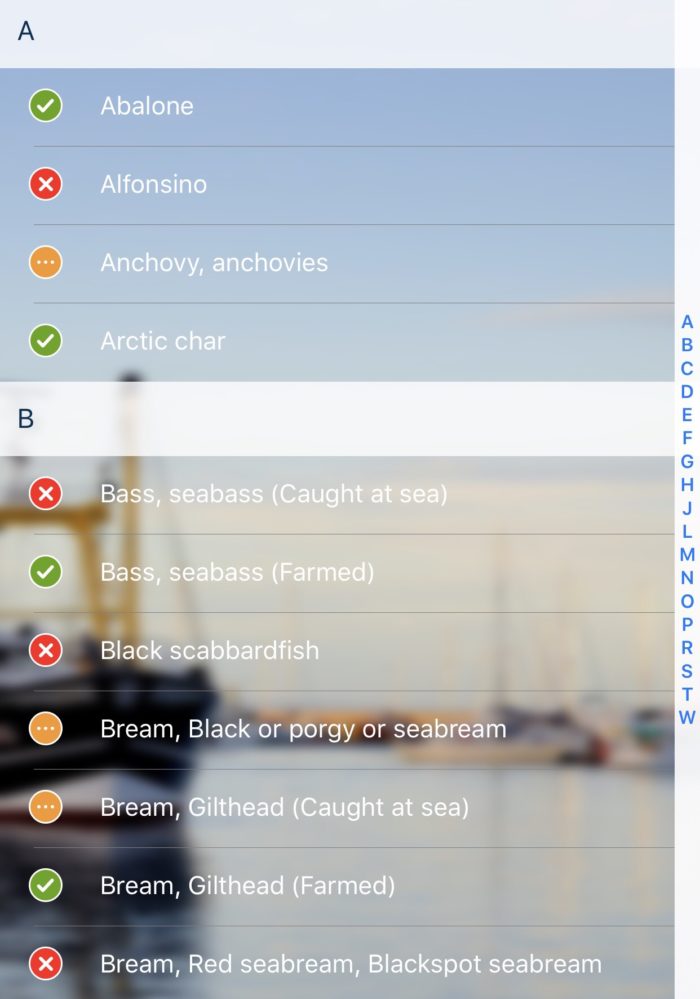
See how your fish is rated - Seafood Watch (by the Monterey Bay Aquarium) has a searchable database and offers a Sustainable Seafood app.

Look at how much information they give you in a very user-friendly way - Whole Foods Responsibly Farmed uses third party certification. These stores have actually phased out fish that are irresponsibly caught and those whose populations are threatened from overfishing.
- Fishwise: Explains how the fish is caught, place of origin, and whether it’s sustainable or environmentally threatened.
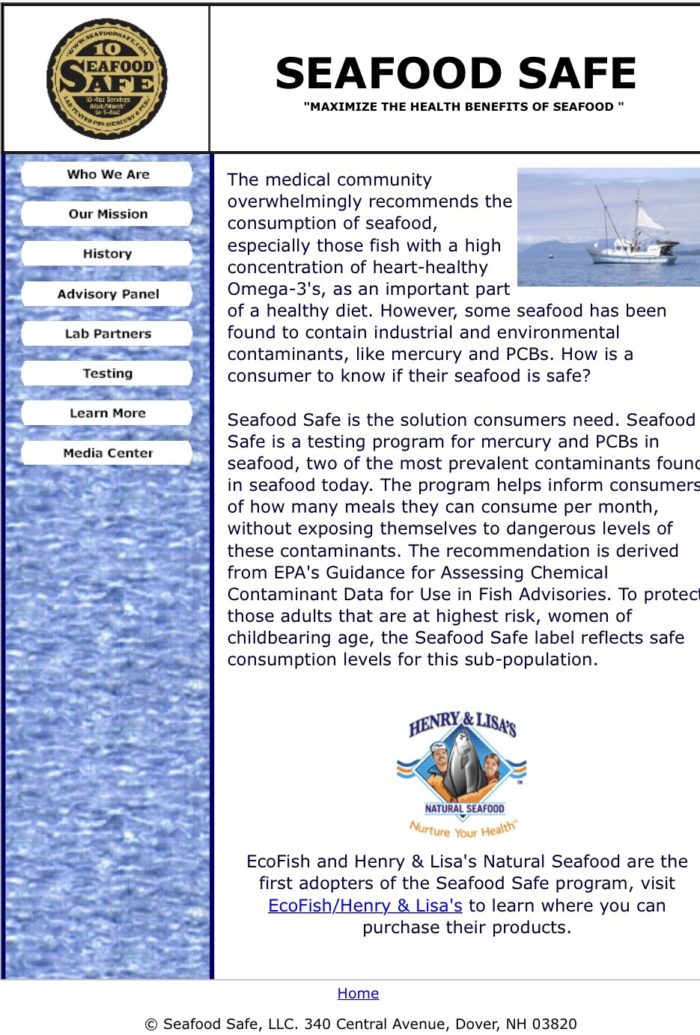
- Seafood Safe: independent testing of fish for contaminants, including mercury and PCBs, and how much to safely eat.
- Environmental Working Group identifies which fish are highest in Omega-3s, which is an important marker of nutrition. They also provide a “custom calculator” to determine which fish is best for you!


And here’s my list of best fish
(the lower down in the food chain, the better)
- Sardines (Pacific/US waters where they are abundant and well managed and not Mediterranean)
- Wild Alaskan and Sockeye Salmon. Alaskan waters are fiercely protected from pollution. Canned is also OK.
- Anchovies
- Herring
- Freshwater Farmed Coho Salmon. Salmon only live about three years, compared to Orange Roughy that can live over 100 years. That’s a long time to be accumulating mercury and other toxins.
- Rainbow Trout
- Mussels
- Atlantic Mackerel
- Oysters
- Pollock
Best idea is to download an app and have it ready to use at the grocery store counter when you see what’s available. I always ask: what’s fresh (not frozen), came in today, lived in the cleanest water, and is the most nutrient dense.
Enjoy your delicious, healthy Omega-3 catch!

I’m going to find some rainbow trout then, those are delicious. I think is amazing that orange roughy can live to 100! Also, remember Qin Shi Huang? He was the emperor of China around 200bc, he had the terracotta army made and some part of the great wall.He was taking mercury pills to make him immortal but it seems they made him a bit weird, then killed him. Thanks for the Dr. Seuss inspired title and wonderfully useful and entertaining articles!
Always a great idea to try something new. Here in the states most fish markets have dumbed things down for what they consider to be a pretty unadventurous audience. Always ask what’s new and try new things on restaurant menus….after asking a few questions 🙂
Great Post! It’s good to sea what kind of fish is healthiest for my family.
It’s always changing because with the quality of the water, so check the apps and website resources from time to time!
How can consumers know for sure that what we are buying is truly wild caught Alaskan salmon?
My biggest challenge is deciphering the can labels and stamps. Some canned salmon have a stamp that reads only codes with numbers and letters, or reads “Alaska” or Wild or Wild Caught. As well, the paper label will read “Wild” but not “Wild Caught” or the paper says Alaska wild caught but the can is not stamped Alaska. I have read that “wild” may not actually be wild caught but the fish genes from salmon caught in the wild and then raised and bred in a farm. I also read the only true wild caught canned salmon has a stamp on the can lid that reads “Alaskan Wild Caught” only. It is very hard to decipher.
Hi Corri,
That’s a great question. If a can of salmon says “wild”, then it is wild-caught, not farm raised. Roughly a third of the Alaskan salmon harvest are fish that were raised from eggs in a hatchery, then released into a migratory river as very small, young “fry”.
Those fry swim to the ocean and live their lives there before returning to their original river of release. Most of those hatchery raised fish are pink salmon, and most pink salmon goes into cans. However, the biggest source of fraud is the sale of farmed salmon as wild salmon in grocery stores and restaurants.
Hope that answered your question.
-your GFF